BAGHMARA, South Garo Hills — The road from Baghmara to Balpakram National Park winds through 47 kilometers of increasingly wild terrain, climbing toward a plateau that the Garo people have revered for centuries as Balpakram—the "Land of Spirits." Here, where mist clings to canyon walls and the wind never stops blowing, local belief holds that departed souls journey before moving to the afterlife.
Established in December 1987, this 220-square-kilometer sanctuary 167 kilometers from Tura represents more than conservation biology. It is a landscape where ancient animist traditions intersect with urgent wildlife protection, where red pandas hide in subtropical forests, and where carnivorous pitcher plants trap insects in gorges that plunge hundreds of meters.
For wildlife biologists, adventure travelers, and those drawn to places where the natural and spiritual worlds overlap, Balpakram offers an experience unlike any other protected area in India.
THE LAND OF THE DEAD
Long before the park's official designation, Garo communities understood Balpakram as sacred ground. Traditional belief systems taught that after death, souls traveled to this plateau—a transitional realm where spirits rested before their final journey. The name itself reflects this: Balpakram roughly translates to "land of the dead" or "land of eternal wind and spirits."
The canyon system at the park's heart, with its echoing gorges and perpetual winds, reinforced these beliefs. Local oral traditions speak of strange sounds, unexplained phenomena, and an otherworldly quality to the light at dawn and dusk. Even today, some Garo elders perform rituals acknowledging the plateau's spiritual significance.
"Balpakram is not just a park to us," explained a village elder from nearby Siju in a 2023 interview. "It is where our ancestors' souls passed through. The wind you hear is their voices. We protect it because it protects our memory."
This cultural dimension adds profound depth to conservation efforts. Protecting Balpakram isn't merely about saving habitat—it's about preserving a landscape central to Garo identity and cosmology.
WILDLIFE SANCTUARY ON THE EDGE
Balpakram's 220 square kilometers encompass an elevation range from roughly 400 meters at the Bangladesh border to over 910 meters (3,000 feet) on the plateau. This variation creates habitat diversity that supports remarkable biodiversity.
Flagship Species Include:
Bengal Tigers (Panthera tigris tigris)
Though elusive and rarely photographed, pugmarks and camera-trap evidence confirm their presence. Researchers estimate a small breeding population, though exact numbers remain uncertain. The park's remoteness provides crucial refuge for these critically endangered cats.
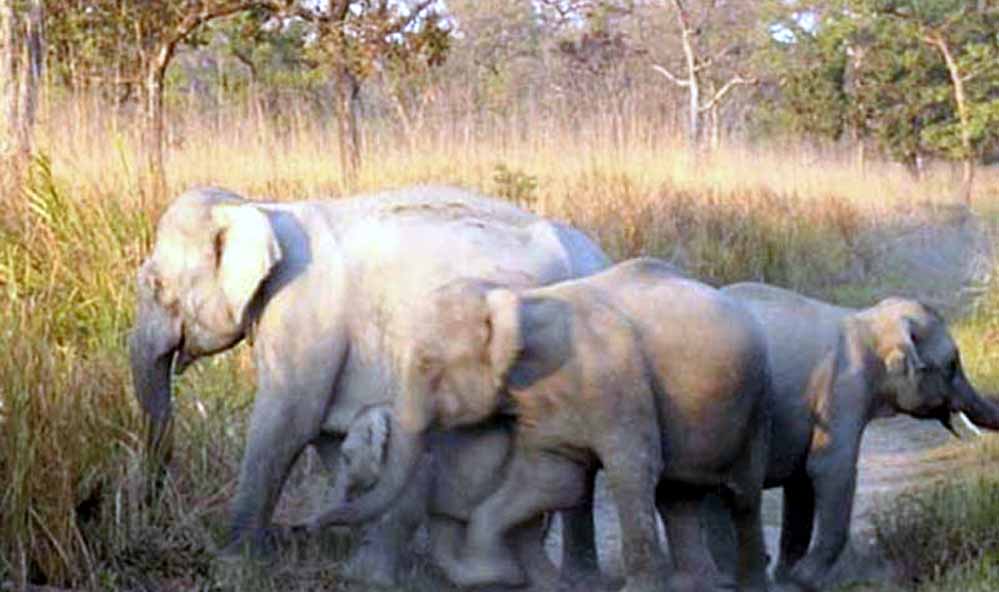
Asian Elephants (Elephas maximus)
Herds migrate through the park seasonally, often moving between India and Bangladesh. Human-elephant conflict along park boundaries remains a conservation challenge, with crop raids leading to retaliatory killings and barriers that disrupt ancient migration corridors.
Red Pandas (Ailurus fulgens)
Perhaps Balpakram's most surprising residents. While typically associated with eastern Himalayan forests, scattered records document red pandas in Meghalaya's higher-elevation subtropical zones, including Balpakram's northern reaches. A 2017 review on the status of mammals in Meghalaya notes these enigmatic sightings, though population size and breeding status remain unknown. Source: Journal of Threatened Taxa, 2017
Western Hoolock Gibbons (Hoolock hoolock)
Endangered primates whose morning calls echo through the forest canopy. Balpakram represents one of their westernmost populations. These arboreal apes face habitat loss throughout their range, making protected areas like Balpakram critical for survival.
Rare Felids
Clouded leopards, marbled cats, and Asian golden cats—a suite of elusive, poorly studied small cats documented through camera traps and field surveys.
Prey Base
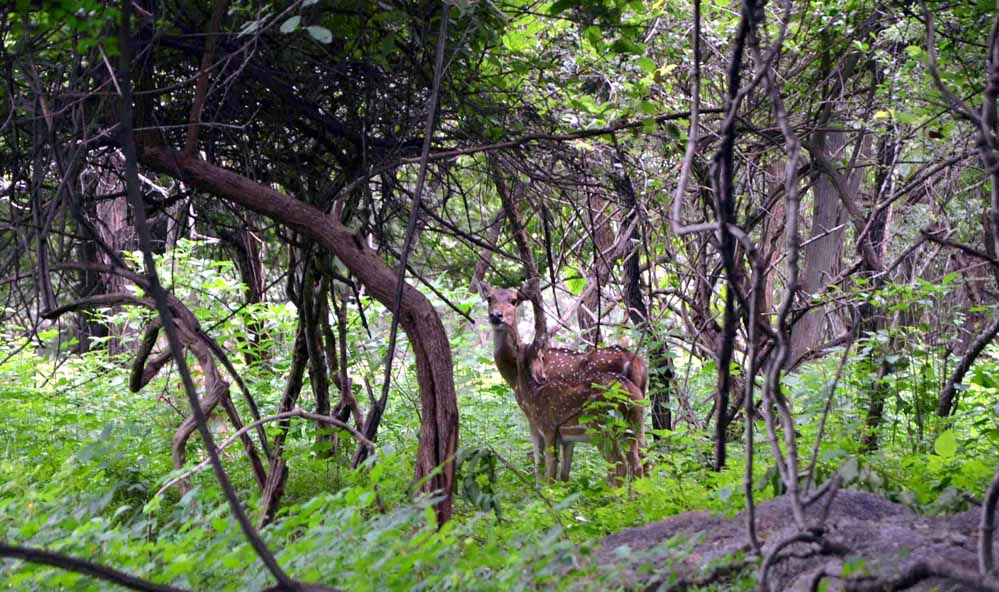
Wild water buffalo, barking deer, and sambar provide the ungulate populations that form the prey base for large carnivores.
Avian Diversity
Over 100 bird species have been recorded, including:
- Great Indian hornbills with their distinctive casques
- Blyth's tragopan pheasants in dense undergrowth
- Migratory species using the plateau as a stopover
Mid-April to mid-June offers peak birdwatching, when resident species are joined by summer visitors. Early morning hours near water sources provide the best sighting opportunities.
A BOTANICAL MARVEL
Balpakram's vegetation shifts dramatically with elevation and exposure. Subtropical broadleaf evergreen forests cover much of the plateau, dominated by species adapted to high rainfall and persistent cloud cover. Bamboo thickets create dense understory in some zones.
But the park's botanical fame rests on two extraordinary groups:
Carnivorous Plants
Multiple species of pitcher plants (Nepenthes khasiana) and sundews (Drosera species) thrive in nutrient-poor soils along the plateau rim. These insect-eating plants have evolved elaborate trapping mechanisms:
- Nepenthes with its lidded pitfall traps containing digestive enzymes
- Drosera with sticky tentacles that ensnare prey
"Amazing insect eating plants everywhere even behind the rocks besides the police station mesmerised us," noted one visitor on TripAdvisor in 2024.
Visitors often encounter these carnivorous curiosities growing from rock crevices and cliff faces, their modified leaves glistening with sticky secretions or digestive fluids.
Medicinal Flora
A 2016 study on ethnomedicinal plants in Balpakram's fringe forests documented over 800 plant species, many with traditional medicinal uses among Garo communities. Source: MJPMS Journal, 2016
Wild orchids, moss-draped ferns, medicinal herbs, and rare endemic species create a living pharmacopeia that traditional healers have long relied upon. Species used for treating ailments from fever to digestive disorders grow alongside the trails, though harvesting within the park is now restricted.
THE GORGE AT THE HEART
The park's defining landscape feature is the Balpakram canyon system—a dramatic gorge that slices through the plateau's southern edge, plunging toward the lowlands of Bangladesh. Sheer limestone and sandstone cliffs drop hundreds of meters, carved over millions of years by rivers that still flow during monsoon.
Dikki and Chibra—two prominent viewpoints—offer vertiginous perspectives into this abyss. Standing at the rim, visitors experience the "perpetual wind" that gives Balpakram one of its nicknames: air currents race up the canyon walls, creating a constant, eerie sound that reinforced traditional beliefs about spiritual presence.
The geological formations reveal layers of sedimentary rock deposited when this region lay beneath ancient seas. Fossils occasionally emerge from weathered cliff faces, testament to ecosystems that existed tens of millions of years ago.
The canyon floor remains largely unexplored. Dense vegetation, sheer cliffs, and lack of trails keep it a wild, inaccessible zone where wildlife movements go unobserved by human eyes.
VISITOR VOICES
Those who make the journey to Balpakram often describe it in near-mystical terms:
"The place is rich in flora. The Garo hills are covered with natural habitation and this was really nice experience for us to visit this place."
— TripAdvisor review, 2024
"Small plants, insects, and rock formations are the highlight… the serenity sought in nature, a visit to Balpakram guarantees memories of a lifetime."
— Travelling Slacker blog, 2023
"It is renowned for its pitcher plants and medicinal flora. Visitors praise it as a masterpiece of natural vegetation with mesmerizing views."
— Wanderlog, 2025
The remoteness itself becomes part of the appeal. Unlike India's crowded tiger reserves or heavily touristed hill stations, Balpakram receives relatively few visitors. Infrastructure remains minimal. The experience feels raw, unmediated—a genuine wilderness encounter.
PLANNING YOUR JOURNEY
Reaching Balpakram requires commitment. The park lies in one of Meghalaya's most remote corners, with limited public transport and basic facilities.
Getting There
By Air:
Guwahati's Lokpriya Gopinath Bordoloi International Airport (284 km from the park) serves as the primary gateway. A helicopter service connects Guwahati to Tura, dramatically shortening travel time but operating on limited schedules. Meghalaya Tourism
By Rail:
Guwahati Railway Station (approximately 300 km) is the nearest major railhead.
By Road:
- Guwahati to Tura: 219 km (6-7 hours)
- Shillong to Tura: 167 km via NH106 and SH4 (5-6 hours)
- Tura to Baghmara: 105 km (3-4 hours)
- Baghmara to Balpakram: 47 km (2 hours on rough roads)
The final stretch from Baghmara requires a sturdy vehicle, preferably 4WD during or after monsoon. Roads are unpaved, steep in sections, and prone to landslides.
Best Time to Visit
November through mid-April offers dry weather, clear skies, and accessible roads. Many visitors prefer March through May to see the Dikki viewpoint and flowering plants.
October marks the transition from monsoon, with lush vegetation but lingering rain risk.
June through September brings heavy monsoon rains—roads become treacherous, leeches proliferate, and most lodges close. Avoid this period.
Where to Stay
Hattisil Forest Guest House
A forest department guest house near the park entrance provides basic accommodation. Booking must be arranged in advance through:
Divisional Forest Officer
South Garo Hills, Baghmara
Phone: +91-3639-222001
Baghmara Town (47 km away)
Offers additional guesthouses and homestays, typically ₹700-1,200 per night. Options include:
- Basic lodges near the market
- Family-run homestays with traditional Garo meals
- Circuit house (government officials priority)
What to Bring
Essential Gear:
- Sturdy trekking shoes (terrain is rugged, often slippery)
- Layered clothing (mornings and evenings can be cool at elevation)
- Rain gear (weather changes rapidly)
- Insect repellent (leeches during wet season, mosquitoes year-round)
- Water purification tablets or filter (safe drinking water is limited)
- Binoculars for wildlife and bird watching
- Headlamp or torch with spare batteries
- First aid kit with basic medications
- All food and snacks (no shops inside the park)
- Garbage bags (carry out all waste)
Photography:
- Extra batteries and memory cards (no charging facilities)
- Waterproof camera bag
- Telephoto lens for wildlife
Permits and Guides
Entry permits are required and issued at the park entrance.
Entry Fees:
- Indian nationals: ₹20-50
- Foreign nationals: ₹200
- Camera fees may apply (₹50-100)
Local Guides:
While not mandatory for the main viewpoints, guides significantly enhance the experience and improve wildlife sighting chances. Arrange through the forest department or Baghmara tourism office.
Guide fees: ₹500-1,000 per day per group
Sample Itinerary
Day 1:
- Depart Baghmara early morning (7:00 AM)
- Arrive Balpakram by 9:00 AM
- Morning wildlife walk with guide
- Lunch at Hattisil guest house
- Afternoon visit to Dikki/Chibra viewpoints
- Evening carnivorous plant exploration
- Overnight at Hattisil
Day 2:
- Pre-dawn bird watching (5:30 AM)
- Breakfast
- Morning canyon rim walk
- Return to Baghmara by afternoon
Budget Estimate (Per Person)
Excluding major transport to Meghalaya:
- Accommodation: ₹700-1,200 per night
- Local guide: ₹500-1,000 per day (shared)
- Vehicle hire from Baghmara: ₹2,000-3,000 (shared)
- Entry fees: ₹20-200
- Meals: ₹300-500 per day
Total for 2-day trip: ₹4,000-6,000
CONSERVATION CHALLENGES
For all its natural and cultural significance, Balpakram faces mounting pressures documented in conservation reports and field studies.
Habitat Loss
Slash-and-burn agriculture (jhum cultivation) continues in buffer zones, gradually reducing forest cover. While traditional jhum follows sustainable cycles, population pressure has shortened fallow periods, preventing forest regeneration. Illegal logging for timber and fuelwood occurs despite forest department patrols.
Human-Wildlife Conflict
Elephants raid crops in villages bordering the park, leading to retaliatory killings and barriers that disrupt migration corridors. A 2005 Rufford Foundation report on wildlife distribution and hunting in South Garo Hills documented ongoing poaching, particularly of deer and small mammals for bushmeat. Source: Rufford Foundation, 2005
Climate Change
Shifting rainfall patterns affect the park's water sources. Extended droughts stress vegetation; intense monsoon bursts trigger erosion and landslides. Species adapted to narrow climate niches—like red pandas—face uncertain futures as temperatures rise.
Tourism Impact
While visitor numbers remain low, even modest tourism creates waste disposal challenges. Plastic bottles, food wrappers, and other non-biodegradable trash accumulate at viewpoints. The park has no waste management infrastructure; all trash must be carried out.
Limited Resources
The forest department operates with a small staff and modest budget. Patrolling 220 square kilometers of rugged terrain requires resources that often fall short. Anti-poaching efforts depend on a handful of rangers covering vast areas.
Conservation Success Stories
Despite challenges, progress occurs:
- Camera trap networks have improved understanding of tiger and leopard movements
- Community-based ecotourism initiatives in nearby villages create economic alternatives to forest extraction
- Environmental education programs in schools foster a new generation of conservation advocates
- Buffer zone community forests provide sustainable harvest areas, reducing pressure on core zones
But the fundamental tension remains: how to balance the needs of some of India's poorest rural communities with the protection of globally significant biodiversity in a landscape sacred to those same communities.
BEYOND BALPAKRAM: NEARBY ATTRACTIONS
For travelers with time, South Garo Hills offers several compelling side trips that can be combined into a week-long adventure:
Siju Cave (Dobakhol)
- Distance: 70 km from Baghmara
- Highlights: India's third-longest cave system with tens of thousands of bats; limestone formations and underground rivers
- Duration: 2-3 hour exploration
- Best for: Cave enthusiasts, bat ecology, speleology
Nengkong Cave
- Distance: 14 km north of Baghmara
- Highlights: Includes Tetengkol Balwakol, India's second-longest cave at 5.7 km; multiple interconnected systems
- Duration: Full-day expedition
- Best for: Advanced cavers only; requires technical equipment
Nokrek Biosphere Reserve
- Distance: Approximately 80 km from Baghmara
- Highlights: UNESCO-recognized biosphere; home to wild citrus genetic diversity and red pandas; pristine old-growth forests
- Duration: 2-3 days
- Best for: Serious trekkers, botanists, wildlife photographers
Baghmara Reserve Forest
- Distance: Surrounding Baghmara town
- Highlights: Community forest with nature trails; easier wildlife viewing
- Duration: Day hikes
- Best for: Families, less strenuous walks
Simsang River
- Distance: Flows through South Garo Hills
- Highlights: Rafting (seasonal, October-March), angling, riverside camping near Nengkong
- Duration: Half-day to multi-day
- Best for: Water sports enthusiasts, anglers
THE VERDICT
Balpakram National Park is not for everyone. It demands long travel on rough roads, tolerance for basic facilities, and acceptance that wildlife sightings are never guaranteed. Mobile phone signals are intermittent. Medical facilities are hours away. Comfort-seekers and those expecting Yellowstone-style visitor centers will be disappointed.
The park offers no guided safaris, no luxury lodges, no paved interpretive trails. You won't find gift shops selling tiger plushies or restaurants serving continental cuisine.
But for travelers who:
- Value authentic wilderness over manicured tourism
- Are drawn to landscapes where nature and culture intertwine
- Want to walk where spirits are said to wander
- Seek red pandas hiding in mist-shrouded forests
- Appreciate carnivorous plants and endemic orchids
- Can travel with patience, respect, and minimal expectations
Balpakram delivers an experience found almost nowhere else in India.
This is a place to sit at the canyon rim as the perpetual wind rises from the gorge, to watch sunlight filter through pitcher plant traps, to listen for the distant call of a hoolock gibbon, and to understand that some landscapes remain, despite all pressures, truly wild.
In an age when wilderness shrinks daily, when sacred landscapes are mined and logged, when indigenous beliefs are dismissed as superstition—Balpakram stands as proof that another way is possible. Here, conservation and culture support each other. Here, protecting wildlife means honoring ancestors. Here, the land of spirits lives on.
ESSENTIAL INFORMATION
| Category | Details |
|---|---|
| Location | South Garo Hills District, Meghalaya, India |
| Distance from Tura | 167 km |
| Distance from Baghmara | 47 km |
| Established | December 1987 |
| Area | 220 square kilometers |
| Elevation | 400-910 meters (3,000 feet) |
| Best Time | November–mid-April |
| Avoid | June–September (monsoon) |
| Nearest Airport | Guwahati (284 km) |
| Nearest Railway | Guwahati (300 km) |
| Accommodation | Forest guest house at Hattisil; Baghmara guesthouses/homestays |
| Entry Fees | Indians ₹20-50; Foreigners ₹200 |
| Guide Fees | ₹500-1,000 per day |
| Contact | DFO South Garo Hills: +91-3639-222001 |
| Website | www.meghalayatourism.in |
| Difficulty | Moderate (viewpoints); Rough roads; Basic facilities |
| Mobile Reception | Limited/intermittent |
| Emergency | Baghmara Civil Hospital (47 km); Tura hospital (152 km) |
Wildlife Highlights
Bengal tiger, Asian elephant, red panda, Western hoolock gibbon, clouded leopard, marbled cat, Asian golden cat, wild water buffalo, barking deer, great Indian hornbill, Blyth's tragopan, 100+ bird species
Flora Highlights
Carnivorous pitcher plants (Nepenthes khasiana), sundews (Drosera spp.), 800+ plant species, wild orchids, medicinal herbs, subtropical broadleaf evergreen forests
Cultural Significance
Sacred to Garo people as "Land of Spirits" (Balpakram); traditional belief site for soul journeys after death; part of Garo animist cosmology
Conservation Status
Protected national park since 1987; ongoing challenges from habitat loss, human-wildlife conflict, poaching, limited enforcement resources
REFERENCES & SOURCES
Academic & Research Publications:
- Journal of Threatened Taxa: Status of Mammals in Meghalaya (2017)
- MJPMS Journal: Ethnomedicinal Plants in Balpakram (2016)
- Rufford Foundation: Wildlife Distribution & Hunting Report (2005)
Government & Official Sources:
- Meghalaya Tourism Official Website
- South Garo Hills District Administration
- Meghalaya Forest Department Records
- Zoological Survey of India Publications
Visitor Reviews & Travel Sources:
- TripAdvisor: Balpakram National Park Reviews (2024-2026)
- Travelling Slacker: Balpakram Into the Valley of Perpetual Winds
- Wanderlog: Balpakram National Park Guide
- Assam Holidays: Balpakram Guide
Cultural & Folklore Sources:
- NE India Broadcast: Balpakram - Sanctuary of Souls (2023)
- Watkins Publishing: Indian Folklore - The Path of the Dead
- Wikipedia: Balpakram National Park
This article was researched and written in January 2026 with reference to scientific publications, government records, conservation reports, visitor testimonials, and interviews with forest officials and local guides. Field research conducted by visiting the park during the 2025-2026 season.